
A bridge connecting Manhattan and the Bronx had been proposed for the site of the Henry Hudson Bridge as early as 1906. However, residents of the Spuyten Duyvil area (the Bronx end of the current bridge) opposed the idea, arguing that the roadwork would destroy the virgin forest found in Inwood Hill Park.
The original bridge was constructed in 1936, opening on December 12th of that year. Construction cost was $4.9 million for a single deck bridge. The upper level was added 2 years later, opening on May 7th, 1938 and cost an additional $2 million (funded by toll receipts).
A major rehabilitation project was undertaken in the early 2000s and further restoration was carried out between 2017 and 2020. Today, few parts of the original bridge remain.
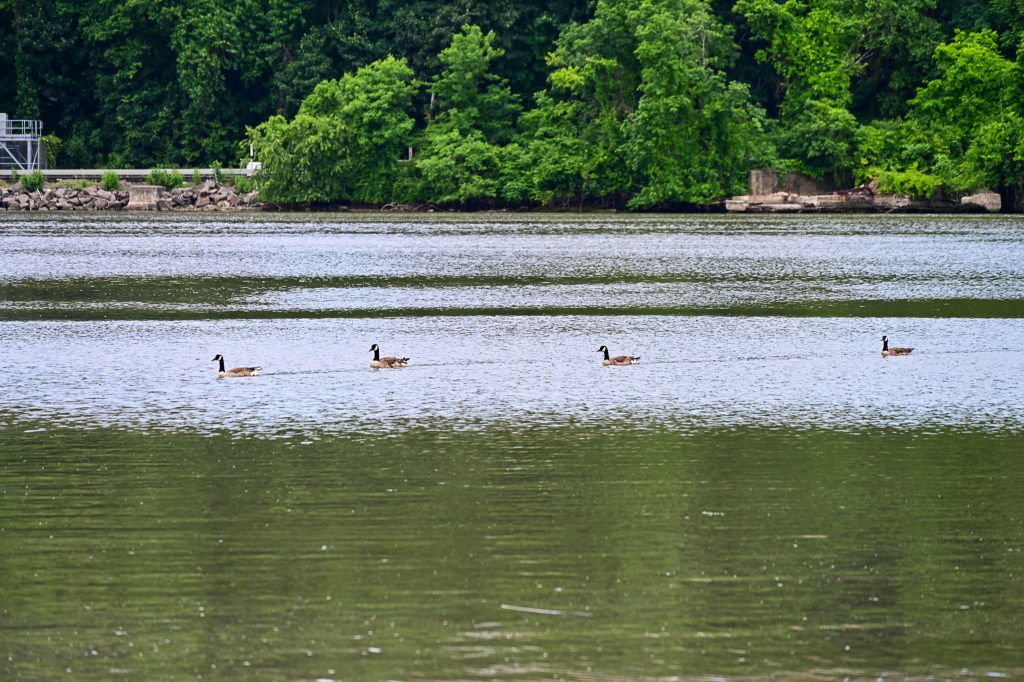
The bridge’s neighbors to the north are the residential communities of Spuyten Duyvil and Riverdale, where single family homes, wooded estates, and large apartment complexes share breathtaking views from the sloping shoreline of the Hudson River and the Harlem Ship Canal. The Manhattan end of the bridge is in Inwood Hill Park, Manhattan’s last remaining natural woodland, which is bordered by the residential community of Inwood.
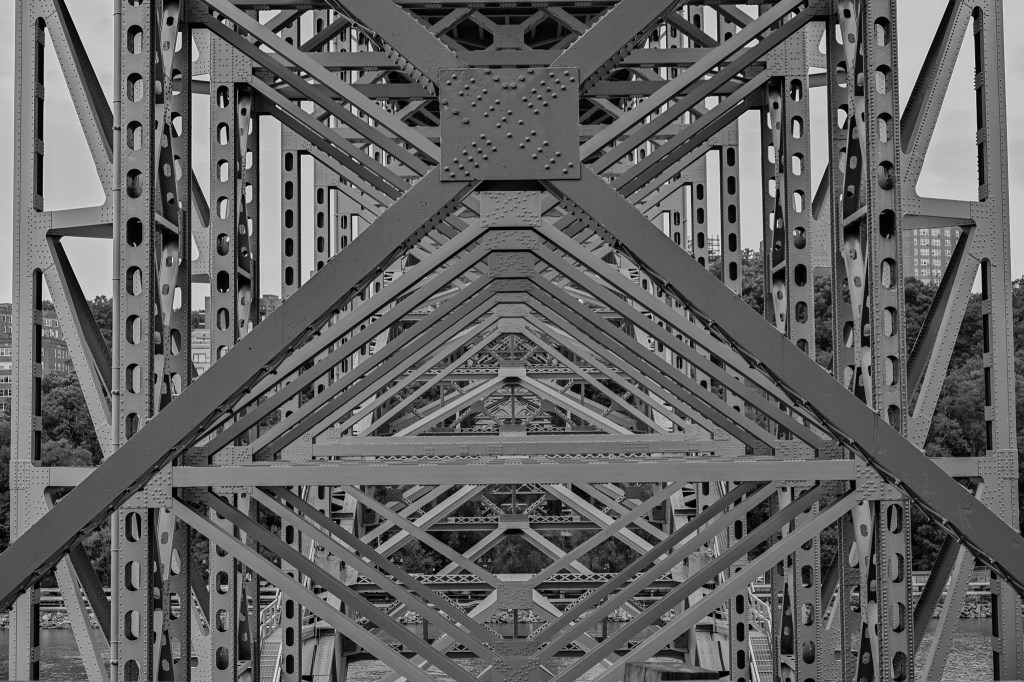
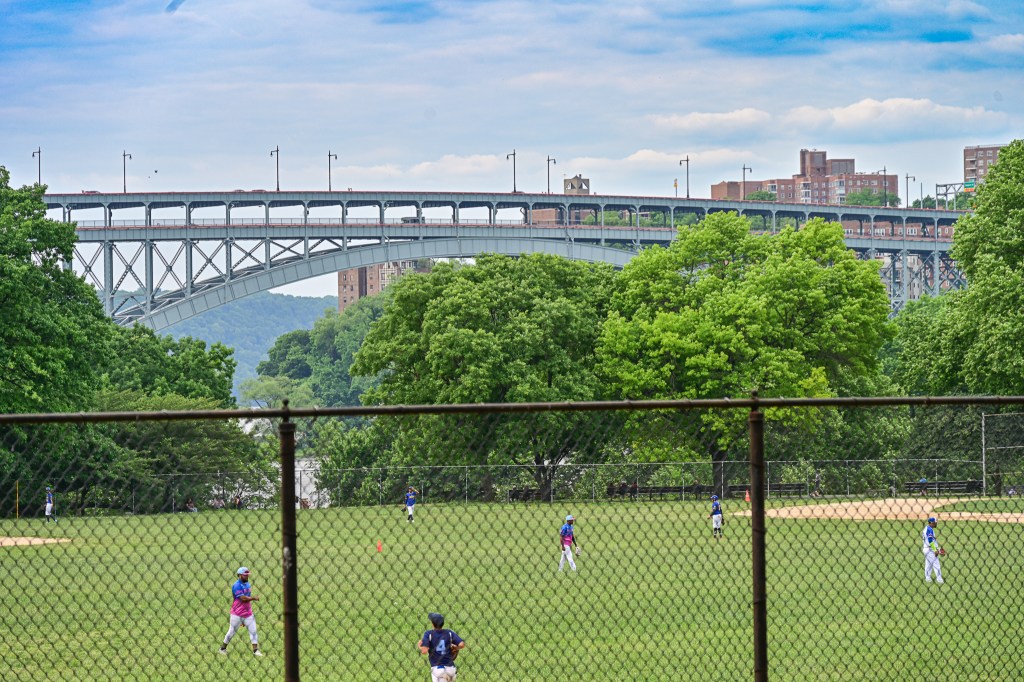
The bridge was designed by David B. Steinman, drawing upon his 1911 Ph.D. thesis in civil engineering at Columbia University. Named to commemorate the voyage of Henry Hudson on the Half Moon, which anchored near the site in 1609, it was the longest plate girder arch and fixed arch bridge in the world when it opened in 1936.
The Metropolitan Transportation Authority (MTA) ran the EZ Pass pilot program on the Henry Hudson Bridge, later expanding it to all bridges and tunnels.
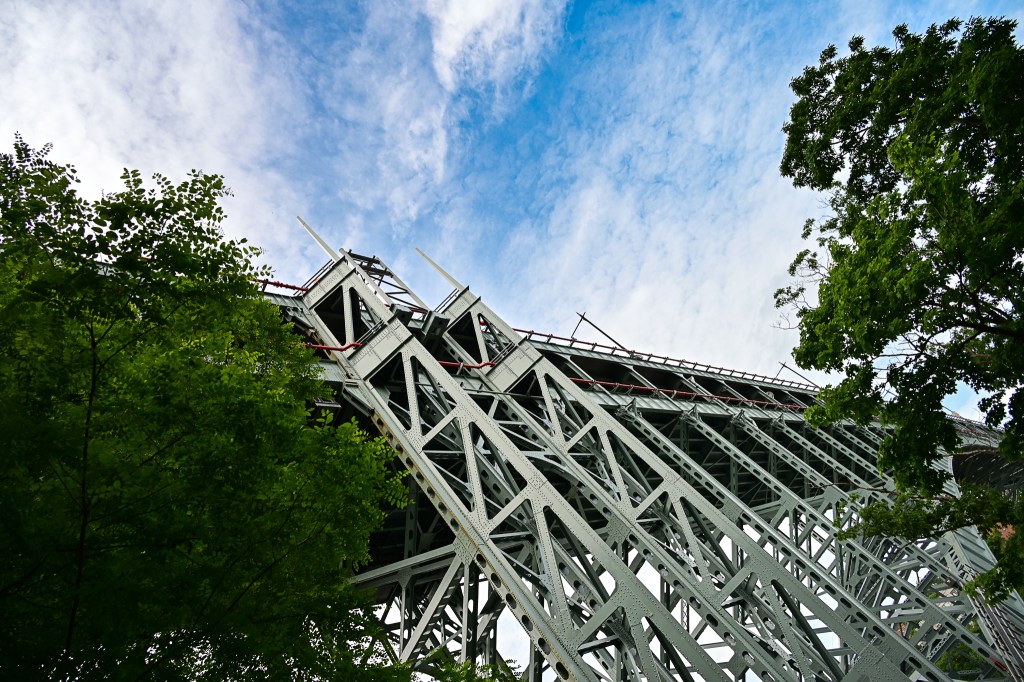

Inwood Hill Park is still a pristine wild forest in many spots. The park itself covers the north-western corner of Manhattan and is directly north of Ft Tryon Park.
 21 Bridges Project