
The idea of a bridge across the Hudson River was first proposed in 1906, but it was not until 1925 that the state legislatures of New York and New Jersey voted to allow for the planning and construction of such a bridge. The George Washington Bridge was commissioned by the Port of New York Authority in 1927 and was nicknamed the Hudson River Bridge until the residents of New York and New Jersey voted for its current name in 1931, the year that it was opened to the public.
Construction on the George Washington Bridge started in October 1927 and the bridge opened to pedestrians on October 24, 1931. On the next day, cars were officially allowed to use the bridge. The George Washington Bridge measures 4,760 feet (1,450 m) long and has a main span of 3,500 feet (1,100 m). It had the longest main bridge span in the world at the time of its opening and held that distinction until the opening of the Golden Gate Bridge in 1937.
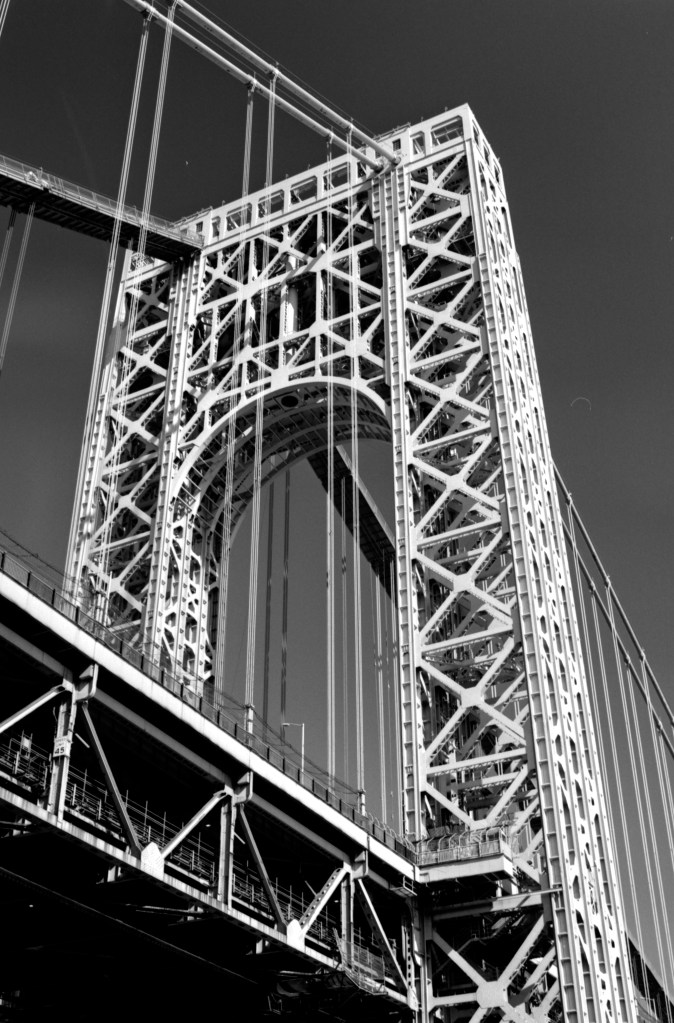
Fifteen years after the bridge opened, the upper deck was widened from four lanes to six lanes to accommodate an increase in traffic. The bridge became increasingly popular for commuters, and in 1962, the bridge became a doubledecker bridge with 14 lanes.
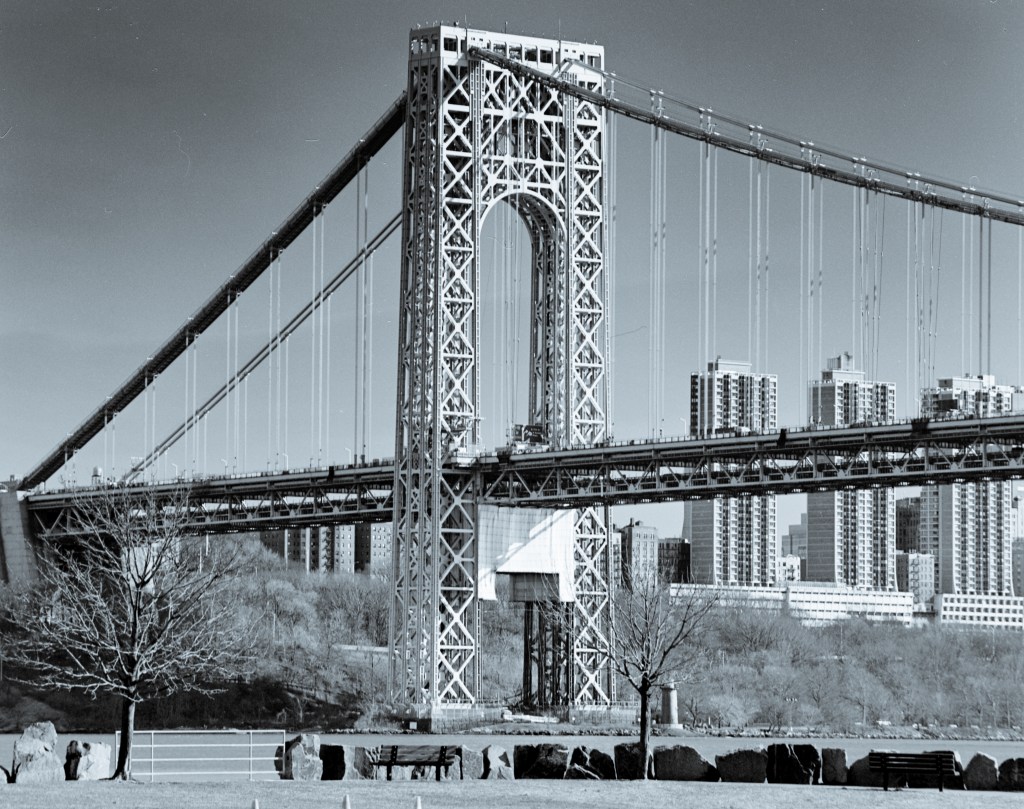
 21 Bridges Project